

UK could unlock £69.1bn by 2030 if creative skills keep pace with AI
- July 7, 2026
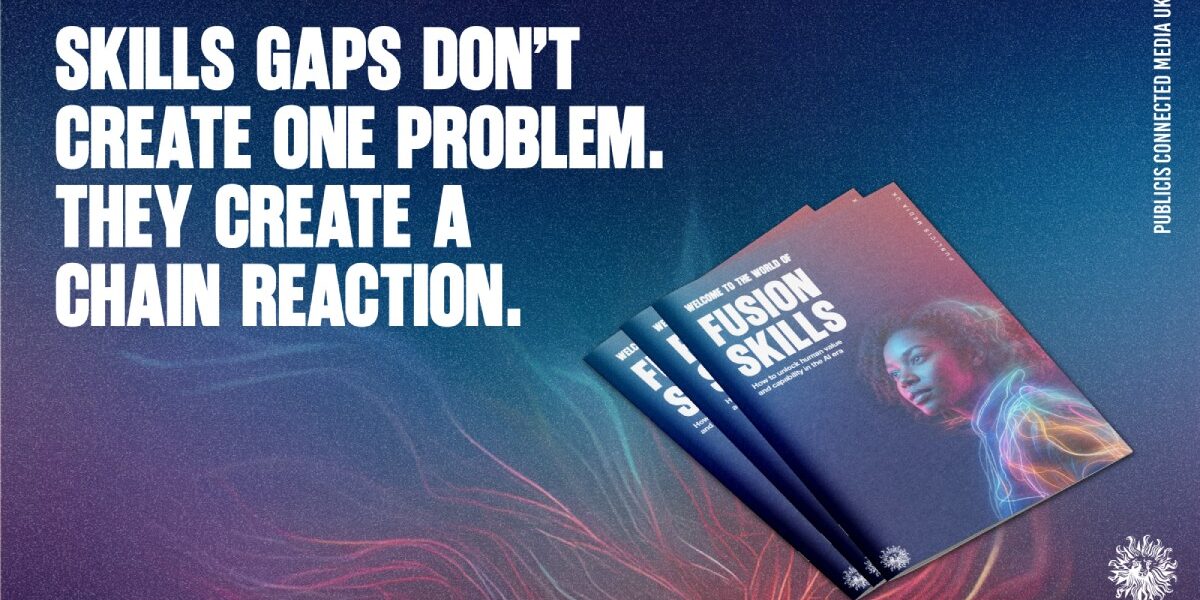
The UK could unlock up to £69.1bn in economic growth by 2030 by accelerating the development of future-ready creative and digital skills in advertising and marketing, according to a major new study from Publicis Media UK.
The findings show how skills alone could act as a powerful growth engine for a sector that already contributes £109bn a year to the UK economy and accounts for 4% of total economic output.
The study underlines the value at stake if skills do not keep pace with technological change. Currently, this sits at £10.9bn a year, equivalent to losing almost £29m every day. Without investing in human-AI capability, the figure is projected to rise by 40% by 2030 to £15.2bn a year under business-as-usual conditions. This is comparable to losing the annual economic output of a major UK city such as Newcastle.
The value at stake as skills requirements shift
Economic modelling, conducted by Kingston University London , estimates the productivity gains that can be unlocked, or left unrealised, as AI reshapes advertising and marketing roles. If employees do not have the right skills required for evolving AI-enabled jobs, individual productivity could fall by 24.6%. That gap translates to around £10,584 per employee a year in lost productivity potential.
Analysed at scale by Development Economics, this modelling estimates that across the UK’s 609,000 advertising and marketing professionals, this skills capability gap is equivalent, in productivity terms, to the contribution of around 150,000 full-time roles, illustrating the scale of value that hinges on how effectively the sector adapts its skills base in the AI era.
Niel Bornman, CEO of Publicis Connected Media UK, said: “AI is changing how advertising works. That’s clear. But people are still our biggest advantage. It’s human creativity, judgement and collaboration that give our industry its economic value and turn technology into something useful. If we want AI to make a genuine difference, we have to invest in the people working alongside it. That isn’t optional. It’s essential if we want a strong, competitive industry that today’s workforce believes in and the next generation wants to be part of.”
The need for ‘fusion skills’
Research conducted by Kingston University shows that with the rise of AI, three capabilities – described as fusion skills – have become essential as professionals increasingly work alongside AI systems in advertising and marketing roles. These are:
- Smart AI questioning: Asking better questions to get more useful, reliable outputs
- Contextual AI training: Teaching AI how your business works so it reflects your data and ways of working
- Critical human judgement: Making the call on when to rely on AI and when to step in
When surveyed, 90% of advertising and marketing leaders believe fusion skills will be critical to senior leadership effectiveness by 2027.
Dr Evy Sakellariou, Associate Professor and Gen AI Innovation lead for Kingston University’s Foresight, Creativity and Future of Work Research Hub, said: “We’re no longer talking about human-led AI, but how people can work effectively alongside machines. To do so, all employees will need to develop these advanced fusion skills alongside core human-centric skills. Our work with sector leaders revealed real enthusiasm for these technologies, but also uncertainty about how best to upskill their workforce.
“Our research sets out a series of key recommendations including shifting to skills-first hiring and promotion pathways, investing in reskilling and lifelong learning, and prioritising fusion skills development for senior leaders and middle managers so they can effectively adapt and reshape their business.”
Paula Cunnington, Chief Talent Officer at Publicis Groupe UK said: “Future success will come from the choices we make now and the people we invest in. That means putting real structure behind it, so people have the tools, training and confidence to thrive alongside AI, especially when the pace of change can feel overwhelming. We need to step up as an industry and take responsibility for building these fusion skills properly and at scale. Do that well, and we build a future that works for our people as much as it does for the wider economy.”